Showing posts with label stay positive. Show all posts

Friday, January 15, 2016

Save Your Relationship with these 5 Tips

Communicate, hug daily and appreciate one another: Experts reveal 5 key tips to save YOUR relationship when babies arrive

  • Swedish experts found 30% of new parents end up separating
  • Those parents don't make time for each other and the flame burns out
  • But, the experts offer five tips for new parents to save their relationships
  • Communication and being sensual are key to success, experts said


The arrival of a new baby can be hard on a relationship.
Romantic dates and impromptu kisses are often replaced by sleepless nights and dirty diapers.
Relaxing by the fire with a bottle of wine is swapped for days full of breast pumps and baby formula.
And so, a once-amorous couple quickly transform into exhausted parents.
However, a relationship can survive the arrival of a newborn – and even thrive, according to Swedish scientists.
Experts from University of Gothenburg in Sweden identified five ways new parents can save their relationship.
Having a new child can be exhausting - and many relationships end up suffering as a result. Experts from University of Gothenberg in Sweden conducted a study into why relationships can fail after the birth of a child - and identified five tips to avoid an 'unnecessary separation'

According to the study, thirty per cent of all parents of young children in Sweden separate.
The average age of the first time of separation or divorce is close to five years of age, the study found.
Scientists had 452 parents answer a scientific questionnaire that measured relationship quality in five different dimensions: consensus, cohesion, satisfaction, sensuality and sexuality.

The questionnaire was answered at three occasions: when the first child was six months old, four years old and then eight years old.
As a result of the study, the researchers came up with five tips to keep a relationship’s flame alive:

1. CLEAR COMMUNICATION 
Couples should speak openly, clearly, and with straight-forward messages.
These messages should include ‘I feelings’ – such as ‘I feel this way’.
And, those messages should be honest and leave no room for misinterpretation. 
Because whether a couple is able to communicate through this difficult time could make or break the relationship, the study found. 

2. BE SENSUAL 
It’s important for a couple to be sensual in every day life – even after a baby’s arrival.
New parents should make it a point to hug each other.
Furthermore, they should be generous with kisses and physical contact.
It's important for new parents to communicate clearly, with straight-forward messages, the experts found. Also, making it a point to remain sensual even after the arrival of a child can keep the spark alive

Malin Hansson, doctoral student at the university, said: ‘When the child was four years old, both sexuality and sensuality were at constant low levels both among the couples who separated and those who had not.’ 

3. SPEND TIME TOGETHER 
Making time for a relationship when a baby’s in the picture can be tough.
But, experts stressed the importance of partners spending time together.
It’s important to spend time both as a couple – and also as a family.
Researchers noted that in couples that ended up separating, most reported feeling less satisfied with the relationship when the child was six months old.
They also felt less togetherness and lower quality in their sex lives compared to those who did not separate.

4. AFFIRMATION 
It can be difficult to feel positive when you’re exhausted.
But, despite any negative feelings you may have, make sure you don’t extend them to your partner.
New parents should also ensure that they spend a lot of time together - both as a couple and as a family

Instead, make it a point to give each other appreciation and love.
A lack of affirmation can lead to a couple's downfall, scientists reported.
In fact, the study found the seven biggest factors leading to separation included stressful conditions, parenthood strain, lack of intimacy, no commitment (in the relationship), differing personalities.

5. GET HELP BEFORE IT'S TOO LATE
In order for a relationship to survive, it’s vital to pay attention to its heartbeat.
That’s because relationship trouble can pop up – and flourish – if you aren’t looking closely.
At the first sign of trouble, don’t immediately abandon ship.
Instead, seek help from professionals – such as marriage counselors – before it’s too late. 
Because according to the study, many couples end up getting ‘unnecessary divorces.’
Ms Hansson said: ‘It is not always bad that parents separate.
‘But there are "unnecessary divorces" that are a result of communication problems or a temporary downturn in the relationship, which could be avoided with more support.’ 
If a relationship starts going south after the arrival of a baby, though, it's important for couples to seek help from professionals. Often relationship problems are a result of communication issues or temporary downturn - and receiving more support could help avoid a divorce



Thursday, January 7, 2016

Health news: Pancakes to tame diabetes?

Health news: Can pancakes tame diabetes?


Buckwheat, a traditional ingredient in crackers and pancakes, may help patients manage their diabetes. 
In a new trial, the fibre is being given to patients with Type 2 diabetes, the most common form, to help lower their blood sugar levels.
With Type 2 diabetes, the body becomes resistant to insulin, the hormone which helps mop up sugar in the blood so it can be converted into energy. 
The new trial, at Manitoba University, Canada, follows earlier research which found that buckwheat can lower glucose levels in animals by up to 19 per cent. 
It is thought that the active ingredient, a compound called chiro-inositol, makes the cells in body tissue, such as muscle, more sensitive to insulin so the body handles it better.
In the study, men and women will eat different amount of crackers containing buckwheat each day for seven days.
Shocking way to beat skin cancer
Could skin cancers soon be destroyed by super-fast bursts of electricity? New research on animals shows that electrical pulses lasting less than one second were enough to destroy malignant melanomas - the most dangerous form of the cancer. None had recurred four months later. 
Malignant melanoma kills around 1,700 people a year and is the third most common cancer in those aged 15 to 39. 
Usually the lesion is surgically removed, but it is time-consuming, painful and almost always leaves a scar. In the latest study, at the Old Dominion University in Virginia in the U.S., the tumours had gone within an average of 47 days in the 17 animals treated. It is thought pulses penetrate every tumour cell, damaging the DNA and disrupting the blood supply that tumours need to live and grow. Further trials are likely.

Leg implant that checks your blood pressure

A gadget implanted in the leg could carry out round-the-clock checks on blood pressure. The implant, no bigger than a grain of rice, monitors readings 30 times a second and transmits the results to a handset worn on the patient's belt. This can then be plugged into a computer to send the results to the doctor. 
The device, developed by scientists at the Fraunhofer Institute for Microelectronic Circuits and Systems in Germany, could be more accurate and convenient than current methods. 
High blood pressure - also called hypertension - is one of the major risk factors for heart attack and stroke, and affects one in five people in the UK. 
Clinical guidelines state the ideal limit for blood pressure is 140mmHg over 85mmHg. But because readings can vary throughout the day, patients often have to undergo ambulatory monitoring. 
This involves wearing an inflatable cuff on the arm for 24 hours. The cuff expands every 20 minutes during the day and hourly at night to take a reading. Many patients find this uncomfortable. 
The implant, which is placed inside an artery in the groin under local anaesthetic, can be removed by doctors after diagnosis. Measuring 1mm in diameter, it can perform thousands of checks every hour, giving the doctor an accurate indication of a patient's heart attack risk.
Writing on wall for superbugs
Antibacterial wall plaster that kills harmful bugs could be used in hospitals to protect patients from infection. The decorator's plaster, developed in China, has proved effective at destroying several harmful organisms, including the 'superbugs' MRSA and E.coli. Drug-resistant bacteria have emerged as a major public health problem over the past ten years. 
Regular handwashing is thought to be one of the most effective hygiene measures - but the experimental plaster could be an additional solution. Developed by scientists at Wuhan University, it has the same building qualities as traditional gypsum plaster, but any bugs that come into contact with it are instantly destroyed. Researchers have not revealed what exactly is in the plaster, but in tests it was more effective than penicillin at killing a range of common bacteria. 
bicycle
Male cyclists have lower bone density in their spines than men who did a greater variety of exercise
Cyling can be bad for bones

Cycling may be a great way to burn calories and tone your legs, but experts are warning it should not be your only form of exercise. 
A recent study in the journal Medicine and Science In Sports and Exercise showed that keen male cyclists had significantly lower bone density in their spines than men who did a greater variety of exercise. 
Cycling is a low-impact sport which means that while it's great for vulnerable joints, it does not have the weight-bearing impact of activities, such as aerobics, that helps to build strong bones. 
While the action of pedalling does help to strengthen bones in the hips to some extent, the spine gets hardly any weight to bear. 
The solution is to include other exercise such as aerobics and weight training so cyclists achieve fitness and a strong skeleton.
You can also slow bone loss with a healthy diet including cheese, fish, fresh fruit and vegetables, and the good news is that cyclists tend to have less body fat and more muscle than most other people.

Wednesday, January 6, 2016

Habits of Unhappy People and How to Avoid Them

12 Habits of Unhappy People (and How to Avoid Having Them)

“I am determined to be cheerful and happy in whatever situation I may find myself. For I have learned that the greater part of our misery or unhappiness is determined not by our circumstance but by our disposition.” ­– Martha Washington, wife of 1st U.S. President George Washington

Happiness is something that we all strive to attain. As human beings we can accept the fact that: (a) life is short, and (b) unhappiness makes our lives difficult. As is common knowledge, our habits have a big impact on the quality of life that we live; specifically, these habits directly impact our happiness (or lack thereof). To make a clear distinction, there is a strong difference between clinical depression and chronic unhappiness. Depression is a chemical imbalance in the brain, while unhappiness is a disposition that is often acquired through how we choose to live our lives. Similar to depression, however, unhappiness can be diagnosed and treated.

HERE ARE 12 HABITS THAT CAN CAUSE UNHAPPINESS, ALL OF WHICH CAN BE AVOIDED.

1. CHRONIC COMPLAINING

Happy and successful people do not complain much. On the other side, it seems that chronic complainers always have something negative to say… even when those around them are happy! The bottom line: we all have different circumstances that we are given in this lifetime, but in the end these circumstances are ours – fair or unfair, wanted or unwanted. Instead, seek solutions to problems instead of complaining, which leads to nowhere.

2. BEING CRITICAL – OF SELF AND OTHERS

How we talk to ourselves shapes our self-image, for better or worse. Self-worth is an essential component to our happiness, and feeling good about ourselves is a right that we all have. Realize when mistakes are made, accept them, and move on…don’t engage in negative self-talk. Further, respect the inherent differences of others and recognize their right to live happily and without undue criticism.

3. LIVING BEYOND MEANS

We live in a materialistic society, one where we are constantly bombarded with advertisements for the latest car, gadget, or credit card; all promising an easier, more fulfilling existence. Don’t believe it for a second. While purchasing a new product may provide a needed emotional boost, it doesn’t last. Ever heard the term “buyer’s remorse”? It exists for a reason. Instead, seek out something to do that doesn’t involve whipping out a piece of plastic – exercise, reading, sightseeing, etc. – anything brings satisfaction without the debt.

4. NEGATIVE ADDICTIONS

Most things are good in moderation – food, a drink or two, entertainment… it’s when these things take center stage in our lives that it becomes a problem. Unfortunately, many good people have met their end through addictive habits, especially through dependence on alcohol and drugs. A great preventative measure and remedy to these addictions? Finding and living our passions to the greatest extent possible (see #8).

5. REGRETTING THE PAST

Regret is not only useless, it can be extremely harmful. Research continues to show that repetitive, negative thoughts about decisions made in the past in often a precursor to chronic stress and depression. According to Psychology Today, there are four ways to cope with regret: (1) learn from mistakes but don’t dwell, (2) if nothing can be changed about the situation to let it go, (3) make sure too much blame is not being undertaken, and(4) reframing the situation more positively.

6. WORRYING ABOUT THE FUTURE

We only have so much say in what our future holds. This is not meant to disempower (quite the opposite); rather it is stating simple truth. What we can do is live in the present while fully exercising our God-given abilities and talents, enabling and empowering us to live a happier existence. There’s that phrase again: living in the present. Face difficulties as they arise and let them go. Enjoy the beautiful things in life and experience them fully…be present.

 7. BEING DRIVEN BY FEAR

Yes, fear can be an enabler to unhappiness. To fully understand this, we have to again go back to being present. Quite simply, we can’t allow fear of the unknown (and/or the unavoidable) to cripple our quality of life. Fear is a negative thought process that is often on auto pilot. Remember: we are not our negative thoughtsWe are not fear, worry, anxiety, or any other negative thought process.

8. DELAYING GOALS AND DREAMS

It’s relatively easy and effortless to get caught up in the routine of life: working, eating, sleeping, maybe even a day or two of doing something fun or relaxing. But here’s the thing: by not directing our talents and passions toward a positive and tangible goal, we potentially discard something great before its realization. The hardest part of living out our goals and dreams is taking the first step. After building a game plan taking that first step,only then can we see the possibilities.

 9. GOSSIPING

Nothing exudes unhappiness and insecurity more than negative small talk about someone else. After all, why would a happy, confident person engage in something that is of no benefit? They wouldn’t. Gossip is something to be left to the kids at recess, not to adults attempting to make their lives (and others!) better.

10. HOLDING GRUDGES

Similar to other negative emotions, animosity is a needless weight on our backs. We are all witness to the negative behaviors of other people and can become (sometimes justifiably) angered as a result. But remember: this isn’t about their ignorant behavior; it’s about your happiness. Either forgive, forget, or ignore… and move on with your life.

11. EATING POORLY

Ingesting nutritionally-bankrupt food is all about immediate gratification. It’s certainly not about feeling good long-term, as eating poorly can result in bad health, weight gain, depression, lack of energy and decreased productivity; while having a well-balanced diet results in an entirely opposite effect – more energy, a healthy weight, mental alertness, and increased productivity. Eat right, look great, and feel great.

12. EXPANDING OUR PROBLEMS

When we experience unhappiness and discontent, our first reaction is almost entirely emotional. In other words, we blow things completely out of proportion. After all, we still have that darned “lizard brain” (amygdala) – the epicenter of negative emotions. Instead, just take a step back, look at the problem objectively (with minimal emotion), and focus on a solution!
 Once aware of these habits, you can make sure to keep them at bay by following the advice mentioned above.

Sunday, January 3, 2016

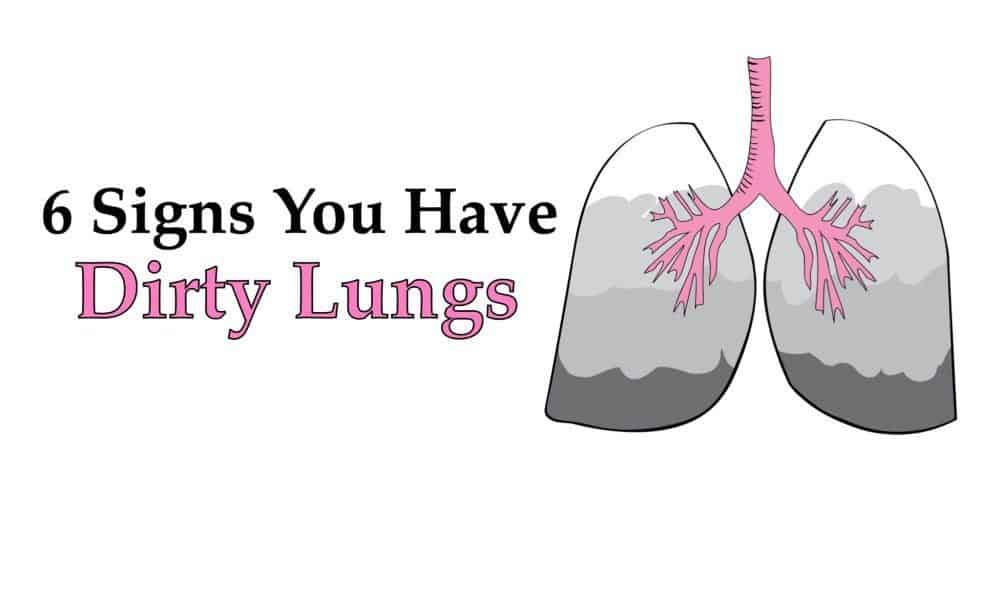
Signs That You Have Dirty Lungs

6 Signs You Have Dirty Lungs

by PP

What do we know about our lungs? “Well, isn’t that where we store air to breathe… in order to, uh, stay alive and all?”
Yes, the lungs do indeed perform that vital function, but they’re actually quite magnificent organs when explored. So, before we get into what harms these vital organs, let’s take a closer look at what they entail.
Our lungs are sponge-like in texture and serve as the refining organ in the consumption and breakdown of oxygen. When we inhale air through our nose or mouth, the air travels down into the larynx and through the trachea. This air then reaches our left and right bronchi, which transports the air to the lung. The air then moves to the alveoli – microscopic sacs that absorb oxygen from the air – via the bronchioles. The alveoli then transfer the oxygen into our bloodstream. Finally, the carbon dioxide waste taken in from the air is transferred back from the blood to the alveoli, where it is then exhaled.
Okay, so biology lesson over. It’s not as simple as just breathing in and out, apparently. It’s actually quite remarkable that such a complex process is performed in the matter of just a couple of seconds. Unfortunately, any miscue in this complex process usually results in either chronic or acute lung damage.
If someone suffers from a lung condition, it’s usually a result of damage to the alveoli (the lung’s air sacs) or the bronchi (large airways of the lung). Three of the most common ailments of the lungs – bronchitis, asthma and emphysema – are a result of an abnormality involving the bronchi or alveoli.
Smoking is so damaging because it stunts normal lung function. Chronic obstructive pulmonary disease, or COPD, most commonly occurs in those that smoke. This damage to the lungs creates difficulty in breathing out, resulting in shortness of breath. Emphysema (a type of COPD) is usually the result of smoking; as tobacco smoke damages the alveoli, trapping air in the lungs and making it difficult to breathe normally.
While smoking is certainly a cause of damage to the lungs in many cases, it’s not the only factor – infections and genetics also plays a role. As mentioned, the lungs are only a part of what is a complex system, and damage to any part of this system can result in severe lung problems.
The positive news (finally!) is that the lungs can be repaired. Obviously, the extent to which the lungs can heal depends upon the circumstances. But there are certain actions that we can take to aid this healing process.

LET’S DISCUSS SIX COMMON SIGNS OF DIRTY LUNGS FIRST:

SIGN #1: CHRONIC COUGH

When a cough lasts for over a month, it is considered chronic in nature. In all likelihood, medication has been tried and as failed. This should be taken as a sign that something is wrong with the respiratory system.

SIGN #2: PERSISTENT MUCUS PRODUCTION

When our airways are irritated or infected, they will produce mucus (or phlegm) as a defense. If this incessant mucus production lasts longer than a month, it may be a warning sign of lung problems.

SIGN #3: LASTING CHEST PAIN

Chest pain that inexplicably last for longer than a month may be a warning sign. It’s a sign that the lungs are involved if the chest pain is brought on, or made worse, from inhaling, exhaling or coughing.

SIGN #4: SHORTNESS OF BREATH

When shortness of breath occurs, it is usually due to a heart of lung condition. This symptom can be narrowed down to either/or, since both are involved in the transport of oxygen to tissues and the removal of carbon dioxide. When either one of these problems occurs, it results in shortness of breath.

SIGN #5: COUGHING BLOOD

When coughing up blood occurs, it’s always a problem with either the lungs or the upper respiratory tract. Needless to say, this is something that requires immediate attention; as it may signal a severe health problem.

SIGN #6: WHEEZING

Wheezing is a high-pitched whistling sound that usually occurs when breathing out (exhaling), but may occur when breathing in. This is usually a sign that a foreign object is blocking the normal flow of air into the lungs or constricting the lung’s airways.

NOW THAT WE KNOW WHAT TO LOOK FOR, HERE ARE 6 WAYS TO HELP PURIFY YOUR LUNGS.

1. DON’T SMOKE

If it isn’t apparent by now, smoking is probably the worst thing someone can do to their lungs. Hopefully, an education on what this harmful habit does to the lungs is enough to get someone to quit; if not, seek out some people for support. There are plenty of terrific, free resources available online that could help. There’s even a smoking hotline.

2. BREATHE DEEP

Deep breathing for half an hour a day can help purify the lungs. This practice flushes out many of the impurities that accumulate in the lungs. Meditation and yoga are two great practices to take on for this purpose, and they will help with the mental aspect of purification as well.

3. DRINK GREEN TEA

Catechins are antioxidants that may help reduce the risk of lung cancer, and green tea is a rich source. In a study done at Chung Shan Medical University in Taiwan, researchers discovered that drinking green tea could reduce the risk of lung cancer by up to five times. Dr. I-Hsin Lin states: “The antioxidants may inhibit tumor growth,” and “Green tea can protect them from lunch cancer risk, a cup or more a day (is recommended” according to the lead researcher.

4. LOAD UP ON ANTIOXIDANTS

Ingesting antioxidants appeared to be a recurring theme in researching for this article. Another source states that drinking 400 ml of pineapple or cranberry juice before bed helps to fight infection-causing bacteria in the lungs.

5. USE THE EUCALYPTUS

Eucalyptus contains a natural expectorant (decongestant) compound that helps clear our lungs of toxins. Apparently, the plant is terrific in helping to soothe a sore throat and sinus problems. A great way to achieve this effect is by putting 5 to 10 drops of eucalyptus oil in a bowl of hot water, placing the head over the bowl and covering the head with a towel. That certainly sounds refreshing!

6. GET SOME OREGANO

Another natural decongestant is oregano, which also contains anti-histamine properties. Combined, these elements are effective in clearing out nasal pathways and assisting the respiratory function. To get these terrific benefits, simply sprinkle some oregano into some food or drink on a daily basis

Things You Should Do Every Day

10 Things You Should Do Every Day Before 10 AM

“When you arise in the morning, think of what a precious privilege it is to be alive; to breathe, to think, to enjoy, to love.” ~ Marcus Aurelius
You don’t have to be a morning person to benefit from morning rituals. Most people hit snooze, roll out of bed and into some clothes while plunging into their day without a plan.
You, however, can choose to approach your day mindfully. Being mindful will increase the odds that you will feel good, be more productive and end up happier when it’s all over.

HERE ARE TEN THINGS YOU SHOULD DO EVERY MORNING BEFORE 10:00 AM TO STACK THE DECK IN YOUR FAVOR.

MEDITATE

Meditating or even some simple breathing can help you begin your day with a sense of calm. Instead of reaching for your phone or checking email first thing in the morning, take just a few minutes to sit and experience the quiet.
There is plenty of activity during our day, make a commitment to start on a quieter note. It will set the tone for your day and will help increase your focus, energy, and optimism.
“If the only prayer you said in your whole life was, ‘thank you,’ that would suffice.” – Meister Eckhart
Start your day by reflecting on what you are grateful for. A consistent practice of gratitude in the mornings will increase your awareness of gratitude throughout your day. It will also make you more resilient when challenges occur and help you put drama in perspective.

SET YOUR DAILY INTENTION

In the quiet of the day, before the fires need putting out, plan your day by focusing on three goals you want to accomplish.
Make those goals a priority for the day. When you set about planning your day with intention, you are more likely to feel productive at the end of it.

PAD YOUR SCHEDULE

As you go about setting your daily intentions, pad your schedule to allow yourself to tend to fires as they arise. Padding your schedule with free time will give you a better chance of achieving your goals and may even add some downtime throughout the day.

HYDRATE

Your body awakens dehydrated, so it is very important to drink up first thing in the morning. In her book, The Body Ecology Diet, Donna Gates suggests you drink half of your entire daily water intake by mid-morning. It will flush your system of toxins, leave you feeling less hungry and reduce headaches throughout the day.

STRETCH

You will be hard-pressed to find anyone who doesn’t wake up feeling a bit stiff. It isn’t always easy to incorporate exercise into a morning routine. If you were going to choose one thing, the American Journal of Sports Medicine suggests adding a short muscle-stretching sequence of exercises to your morning schedule.
Studies show that consistent stretching in the morning can increase flexibility, improve circulation, reduce stress throughout your day and improve posture.

LISTEN TO MUSIC

Starting your day with upbeat and fun music will not only wake you up but it will fill you with positive energy for your day.
2013 study found that music makes you feel good. According to study participants, the two most important benefits of listening to music are “mood regulation” and “self-awareness.”
Not only has it been shown to improve your mood but it can end up increasing motivation, performance, and lead to a better night’s sleep too.

SMILE

Start your day off by smiling at yourself in the bathroom mirror. Smiling will have a positive effect on your overall attitude and well-being, even when it starts out a little forced. Smiling makes you more approachable, and appear more trustworthy. In fact, The University of Montpellier discovered that smiling will also make you a more effective leader.

CLEAN UP AFTER YOURSELF

Life is busy and morning routines can be a bit rushed. It can be very tempting when you are running behind to leave your clothes on the floor, dishes in the sink or leave the trash until later. Just do put them away!
Procrastination around cleaning up after yourself can prevent you from realizing our highest potential and best work. It also allows you to relax fully upon returning home. It is better to pro-actively clean up after yourself than waiting to be called out on it.

DO YOUR HARDEST TASK FIRST

It might seem enticing to get a bunch of easy things checked off your to-do list, but it has been shown time and time again that doing your hardest task first leads to a more productive and happier day. You are more likely to remember the day as being a good one when your day gets better and is easier over time. The bonus: it helps stop procrastination over the things we like to do the least.

Thursday, December 31, 2015

New Year's Resolutions for Better Mental Health

20 New Year's resolutions for better mental health in 2016
Make 2016 the year you feel a little better. (Picture: METRO/myles)

New Year’s resolutions tend to be themed around ‘I’m going to lose so much weight you can’t see me when I turn to one side’, or ‘I’m going 

to write an ENTIRE BOOK and it will definitely be a best seller’.

We need to calm down a bit. Take it easy. Make our resolutions achievable things that make us feel good when we manage them, not sad 

and ashamed when we mess up.

One thing that’s worth committing to this year is yourself – your wellbeing, your happiness, and your general mental health.

The great thing is that there is no failure. If you’re dedicating some time and care for your mental health, you’re already doing something 

brilliant.

Here are a few resolutions that will help you along the way.


1. Meditate


Try the Headspace app to get started. You’ll probably feel a bit silly at first, but meditation really can work wonders – even if it’s just to give 

you a few minutes of true calm.

20 New Year's resolutions for better mental health in 2016
You don’t even need to sit like this. (Picture: Getty)

2. Schedule in some quality alone time


Spend some time alone doing something that makes you genuinely happy and relaxed – whatever that may be.
Do it at least once a week, and make sure to actually schedule it in your planner with a set time and day. Why? So you’ll actually commit to some me time (or masturdating, if you prefer).


3. Keep track of your moods


Get out the planner again, and start making a little note each day of how you’re feeling, even if it’s just a smiley/sad face.
This will help you stay on top of when a bad day has become a bad month, and lets you see if there’s any damaging patterns emerging.


4. And each day, write down something good that happened


It can be something tiny, like ‘excellent doughnut at lunchtime’ or big, like ‘got offered my dream job’. Putting a positive slant on your day will help you feel more positive overall.
Plus, at the end of the year you get to look back at 365 days of great things that have happened. Which is nice.

Woman's hand writing on journal (focus on pen)
(Picture: Getty)

5. Open up to the people you care about


They need to know what’s going on so they can step in and help when necessary.
Plus, talking about whatever you’re going through helps you deal with it.


6. And on that note, make sure you spend time with those people


Loneliness helps no one. Try to stay social and get out of your own head for a bit. Surround yourself with lovely, supportive people. It helps.


7. Take a break when you need it


It’s easy to get into a strange mindset of always needing to be at work because there’s so much stuff to do/it’s your job to be there/people might secretly resent you when you’re not there.
Dudes, you have holiday time for a reason. You’re supposed to take time off to relax and recharge. Do it.
(Related: stop saying so late at work every day. You’re only going to get run down. You’re allowed to leave on time.)

20 New Year's resolutions for better mental health in 2016
Hammock not necessary, but definitely recommended. (Picture: Getty)

8. Find a hobby you love


It doesn’t matter what it is. If it makes you feel happy, relaxed, and fulfilled, it’s worth doing.
Make this the year you find your ‘thing’.

9. Learn self-help techniques for times of stress


Do some research into cognitive behavioural therapy and self-hypnosis. This is no susbstitute for professional help, but it’s incredibly helpful to have some techniques that work for you when you’re in the middle of a panic attack or depressive episode.

10. Get more sleep


There is not a person in the world who’s their best self on too little sleep.
Try getting into bed 10 minutes earlier each night for a few weeks. Eventually you’ll be getting an extra hour of sleep and feeling the benefits.

20 New Year's resolutions for better mental health in 2016
Get your snooze on. (Picture: Getty)

11. Learn to be okay with saying ‘no’


People will understand if you’re not up for hanging out, taking on extra work, or doing them a time-consuming favour.
Make it your resolution to become okay with saying no when you need to. Seriously, no one will hold it against you.


12. Give up on that New Year’s diet


Because it’s most likely much too strict and not doable long term – you’re just going to feel guilty and disappointed in yourself when you give in to your natural instincts and eat whatever you’re craving.
Don’t make eating healthily a succeed/fail mission. Try to implement healthier changes if you need to, but give yourself a break when you fancy a plate of nachos.


13. Stop the comparisons


As everyone on your Instagram keeps saying (and originally, Theodore Roosevelt): ‘Comparison is the thief of joy.’ And it’s true.
Make a conscious effort to stop comparing yourself to others. You’re doing your thing, they’re doing theirs.

20 New Year's resolutions for better mental health in 2016
Maybe your scoop’s smaller, but hey. You’ve got chocolate. (Picture: Getty)

Every time you find yourself spotting the difference, pause, stop, and tell yourself one cool thing about what they’re doing that inspires you, and one cool thing that you’re doing.
It’ll help you get into the mindset of ‘hey, we can both be amazing’ rather than ‘this person is better than me at this, this, and this’.


14. Put a stop to damaging relationships


If your ‘friend’ makes you feel like crap whenever you spend time together, it’s okay to end the relationship. You’re not a failure, it’s not worth keeping them around, and you’ll feel so much better once it’s done.
Life is way too short to keep negative people around.


15. Do something physical at least once a 


week


Yes, it can feel impossible to get out of bed when you’re in a serious down period (and if you’ve reached that point, we’d reccomend talking to your GP).

But for usual day-to-day happiness, a little bit of exercise is magical. All those fit people weren’t lying about the power of endorphins – they’ll flood your system and make you feel loads better.
Plus – if you choose the right exercise – it can be a great way to vent any stress and anger. Boxing, running are both great for that, while yoga, pilates, and swimming are ideal as soothing downtime.
Or just walk around on a Sunday. It helps, promise.
20 New Year's resolutions for better mental health in 2016
Get a workout buddy. (Picture: Getty)

16. Take some time out to assess the past year


Were you dissatisfied with your job? Living situation? Relationship?
Dedicate some time in the New Year to reflect on 2015 and how you’re really doing. If there are any negatives you’re able to change, start working on doing that.


17. Talk to yourself like a friend


Whenever you find your mental voice being super critical, stop, take a moment, and ask yourself if you’d say the same stuff to a friend. Or your nan.
If you wouldn’t, put a stop to it, stat.
Rephrase it so it’s friend/nan-ready (ie. positive and helpful, not mean). Then go ahead.


18. Try something new


Don’t get too stuck in routines. Make 2016 the year you try at least one thing that scares (and excites) you a little bit, whether it’s finally doing that pottery class or just speaking up in meetings.
You’ll feel really accomplished, and mind find you actually like that thing that terrified you last year.
20 New Year's resolutions for better mental health in 2016

Try an art class, if you like. (Picture: Getty)

19. Really take a look at how you’re spending your time each day


You’ll probably notice that you’re spending about three hours a day scrolling through the internet or watching TV you don’t even like.
A new way to look at the things you use to fill your time: is it helping you achieve your future goals? Does it make you feel good? If it’s a no on both, you shouldn’t be doing it.
Because really, why are we ‘relaxing’ by doing things we don’t enjoy.


20. Get help if you need it


Maybe it’s medication, maybe it’s therapy, maybe it’s just talking to your family and telling them you need some support.
Whatever it is you need, you don’t need to feel embarrassed or ashamed about asking for it.
It’s okay. You deserve to feel good, and happy, and fulfilled. If you need a little help doing that, commit to getting it.
It’ll be scary at first, but the benefits are endless.
let's do this
Here’s to a happy and healthy New Year, everyone!